
CATHOLIC CHURCH IN CAMEROONA HISTORY BUILT ON FAITH AND SACRIFICE
The missionary seed that changed history
The Catholic Church in Cameroon officially took root on December 8, 1890, during a Mass celebrated in Marienberg by Pallottine missionaries led by Henri Vieter. On that day, they consecrated the country to the Virgin Mary, Queen of the Apostles.
One year earlier, in Germany, the first baptized Cameroonian, Andréas Kwa Mbangue, had already laid the foundations of a local Church. He was a committed catechist. Kwa Mbangue abandoned his career as a baker to dedicate himself to evangelization alongside German and later French missionaries. His life remained marked by faith, fraternity, and apostolic commitment until his death in 1932.
At that time, the first pastoral results were already remarkable: nearly 16,000 baptisms, thousands of catechumens, and a rapidly expanding missionary school network.
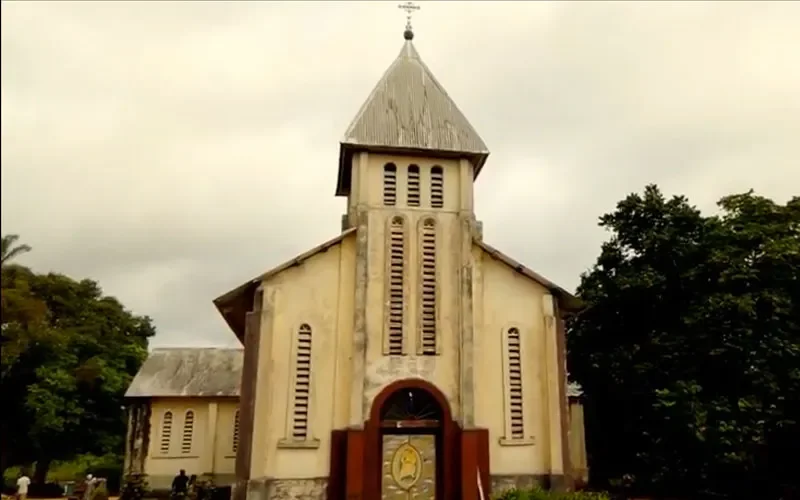
Marienberg is a pilgrimage site, a spiritual symbol of resilience
Marienberg, a spiritual cradle and symbol of resilience
Located near Edéa in the Littoral region, Marienberg quickly became a strategic center for evangelization. Missionaries faced tropical diseases, hostility, and extreme living conditions. Several lost their lives there, some even at sea during the missionary journey. Despite these losses, the mission continued to grow with the gradual creation of new stations in Edéa and Kribi (1891), Bonjongo (1894), Douala (1898), Grand Batanga (1900), Yaoundé (1901), Ikassa (1906), Ngovayang (1909), Sassè (1907), Limbé (1908), Dschang (1910), Minlaba in Puma (1912), and Déido (1913). Everywhere, missionaries learned local languages, valued cultures, and built schools, health centers, boarding schools, and technical workshops, gradually earning the trust of local populations.
After the war: destruction, transition, and new missionary expansion
After World War I, Germany’s defeat led to the departure of the Pallottines. The church of Marienberg was destroyed by Franco-British forces. But evangelization did not stop: the Spiritans, the Mill Hill Missionaries, and other congregations took over. They were assisted by renowned and courageous catechists all over the country. Figures testify to this spectacular growth: more than 67,000 baptized faithful in 1931, followed by an explosion of conversions after 1945, described as a true “Pentecost storm.”
The first evangelization: a Church largely supported by the West
Between 1890 and 1970, evangelization relied mainly on Western missionaries and European funding. Social and educational infrastructures depended heavily on resources coming from Europe. A turning point came in 1969 when Paul VI, during his speech in Uganda, made a historic call: Africans must take responsibility for their own Churches.
Local figures of holiness and Christian commitment
Alongside the first missionaries and Kwa Mbanguè, inspiring Cameroonian figures emerged: Baba Simon, father to the Kirdis in the Far North, acknowledged for his sense of Christian fraternity, interreligious dialogue, and his educational and social commitment.
Witnesses such as Robert Naoussi, whose faith in the midst of suffering deeply impacted Christian communities.
The Church facing the media revolution: challenges and opportunities
From the 1990s onward, television, the Internet, and digital media transformed access to religious information. The Church was no longer the only source of spiritual formation.
Facing this new landscape, several popes encouraged evangelization outside traditional structures: John Paul II, Benedict XVI, Francis, all called for reaching the “existential peripheries” and bringing the Gospel into new cultural and digital spaces.
Heritage and future: a Church rooted in sacrifice and turned toward hope
Today, the Catholic Church in Cameroon remains the fruit of a double fidelity: that of the pioneer missionaries and that of local Christians who continued the work of evangelization. Its history reminds us that it was built not only on faith, but also on sacrifice, resilience, and the commitment of generations of believers.
By Sr. Paul Valerie