
Interview with His Excellency Archbishop José A. Bettencourt with the Italian daily AVVENIR
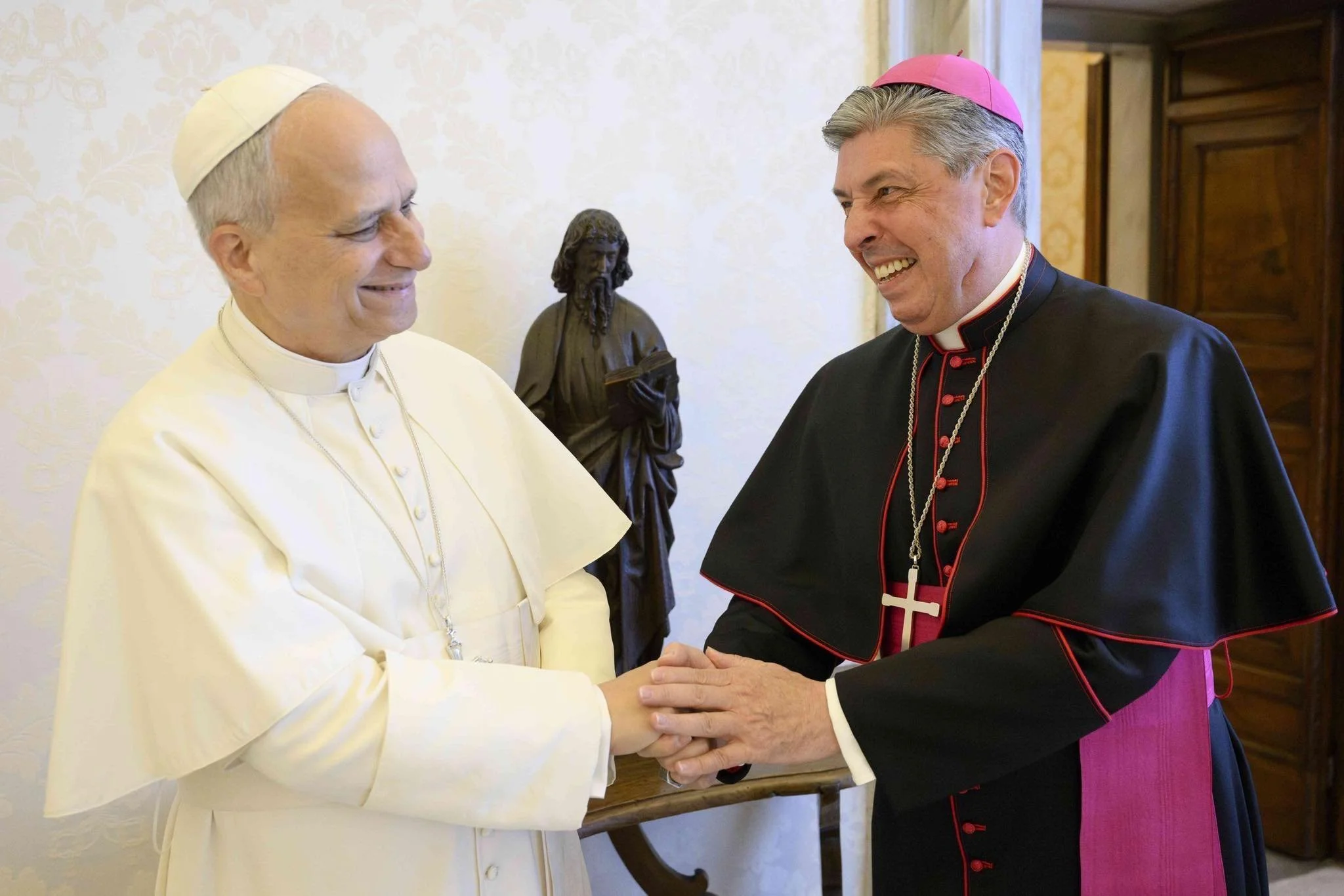
Your Excellency, the Pope is coming to Cameroon as a pilgrim of peace. For years, Cameroon has been plagued by clashes stemming from jihadist violence in the north and separatism in the Anglophone provinces. What is the situation?
The Holy Father’s opening words, “Peace be with you,” spoken on May 8, 2025, resonate with particular force in light of his Apostolic Journey to Africa. Cameroon, which has enjoyed stability for much of its recent history, now faces complex challenges. In the north, threats linked to jihadist groups, particularly Boko Haram, persist, while the Anglophone regions of the Northwest and Southwest have been experiencing a separatist crisis for years. Added to this is the significant presence of refugees and internally displaced persons. Despite these difficulties, the Cameroonian people continue to demonstrate remarkable hospitality and resilience and seek paths of dialogue and coexistence. The Holy Father firmly reaffirms that dialogue remains the only authentic path to building peace. In Cameroon, despite much suffering, encouraging signs are visible. In recent years, there has been a gradual shift in attitude on the part of some of the actors involved in the conflict. After more than nine years of crisis, marked by loss, displacement, and the denial of education for many children, a growing willingness to seek shared solutions is emerging.
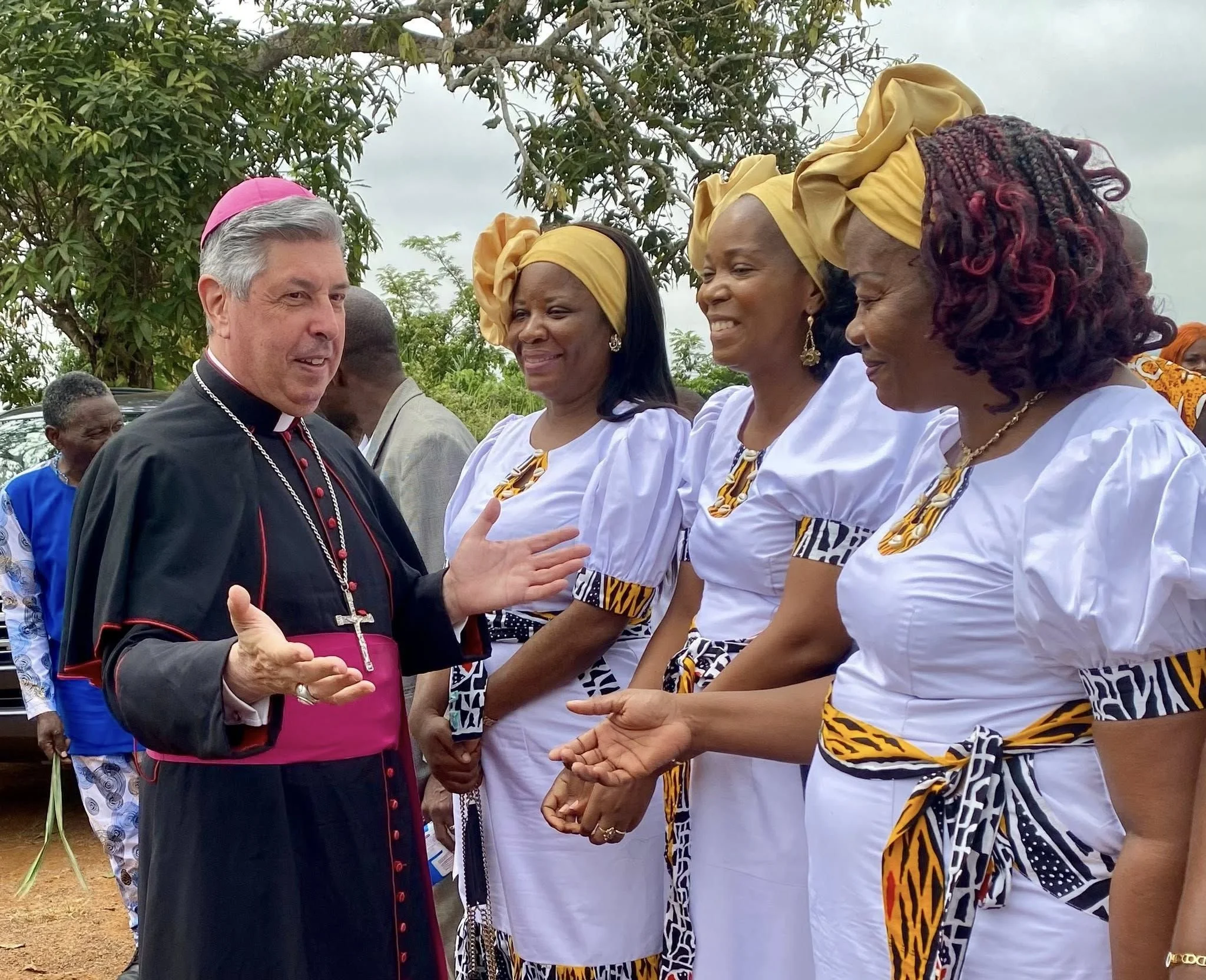
Archbishop José Avelino Bettencourt, Apostolic Nuncio to Cameroon and Equatorial Guinea, among Cameroon’s Catholic faithful / Facebook
The Pope will hold a peace meeting in Bamenda. The Pope reiterates that dialogue is the only way forward. Is dialogue possible in Cameroon?
The Holy Father believes that dialogue is the way to better know and understand “the other.” In 2021, the Cardinal Secretary of State, His Eminence Pietro Parolin, traveled to Bamenda and met with a wide range of stakeholders. The President of the National Episcopal Conference of Cameroon, His Excellency Andrew Nkea, Archbishop of Bamenda, has worked tirelessly in the dialogue process. As the representative of Pope Leo XIV, I have visited the Northwest and Southwest regions 12 times in just two years since I arrived as Nuncio to Cameroon. I believe that dialogue is possible in Cameroon. After more than nine years of conflict in the Northwest and Southwest regions, we are seeing a significant shift in tone among some of the parties involved in the conflict toward seeking a solution. There have been too many deaths; people have suffered; children have been deprived of their right to education; families have left their homes in search of a more peaceful future elsewhere. In the past, we heard residents of Bamenda say they would never return to their hometown because of the trauma they had endured. Today, we can’t wait to see the Holy Father walking through Bamenda. It is a very powerful sign and an extraordinary message to the world. In Bamenda, the Region will be able to see and listen to the Holy Father, who truly comes as a courageous messenger of peace.
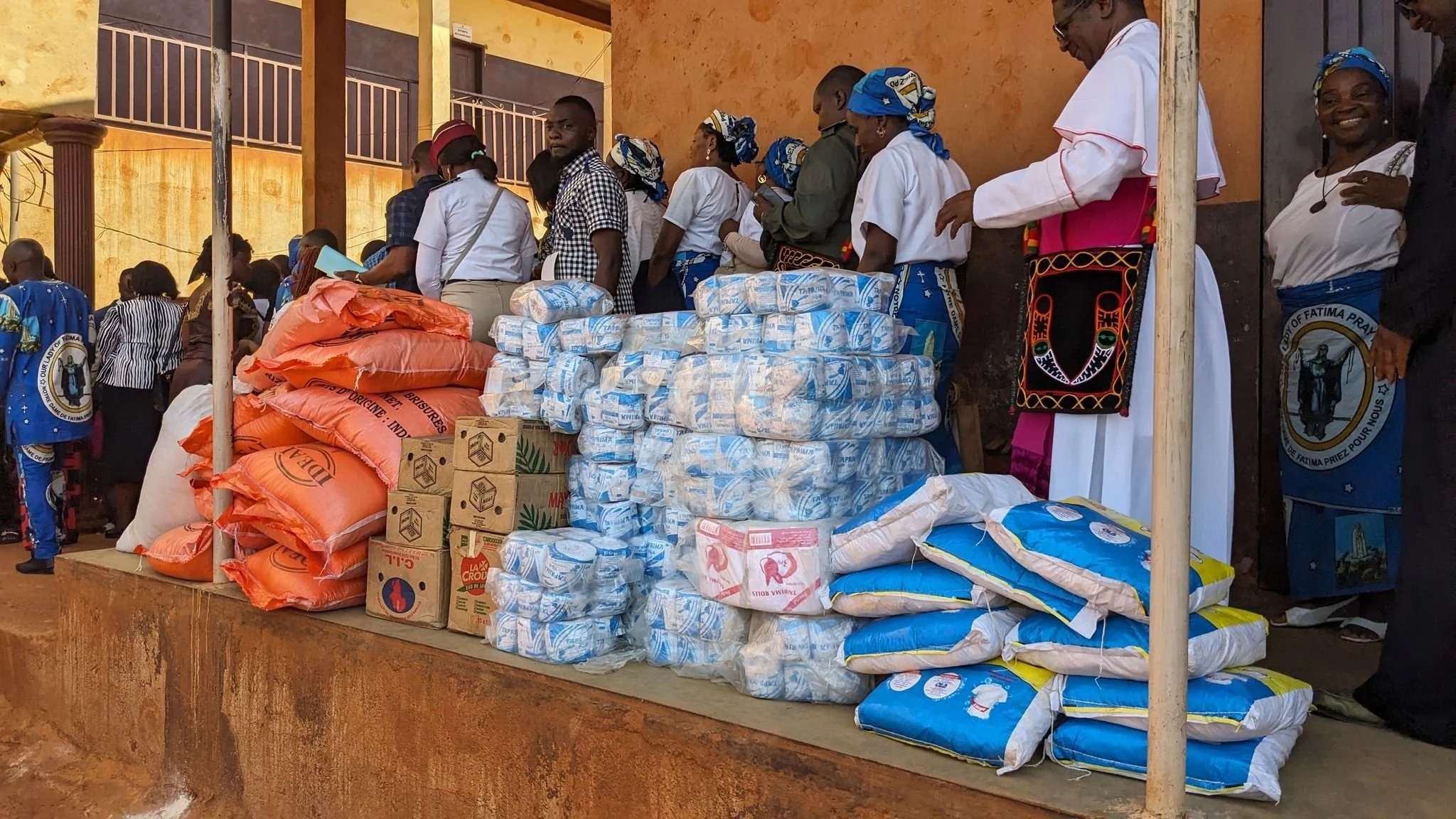
Humanitarian aid distributed by the Archdiocese of Bamenda / Facebook
The insurgency by the jihadist group Boko Haram and the so-called Islamic State in West Africa, along with the Anglophone separatist guerrilla conflict in the western regions, are among the factors that have forced over a million people to flee. Hundreds of thousands of refugees from the neighboring Central African Republic and Nigeria live in Cameroon in conditions of extreme poverty. Humanitarian aid is lacking. Is this the “most neglected humanitarian crisis in the world”? And why has the world forgotten it?
We live in a global context marked by selective communication dynamics and interests often driven by economic logic. Some crises, though extremely serious, struggle to gain international attention. Cameroon, like other African countries, suffers from limited visibility, despite the magnitude of the suffering. In an era characterized by widespread instability, it seems more urgent than ever to rediscover a more authentically human and compassionate vision, capable of recognizing and valuing the richness of African peoples. We live in a very noisy and frenetic world. Almost nothing escapes the issues and narratives presented to the general public through extremely sophisticated means. It also seems that humanity lives in cycles and that we have returned to worrying exclusively about economic issues and, above all, to waging wars for economic reasons. We are living in an extremely unstable era, one that risks causing us to lose everything.
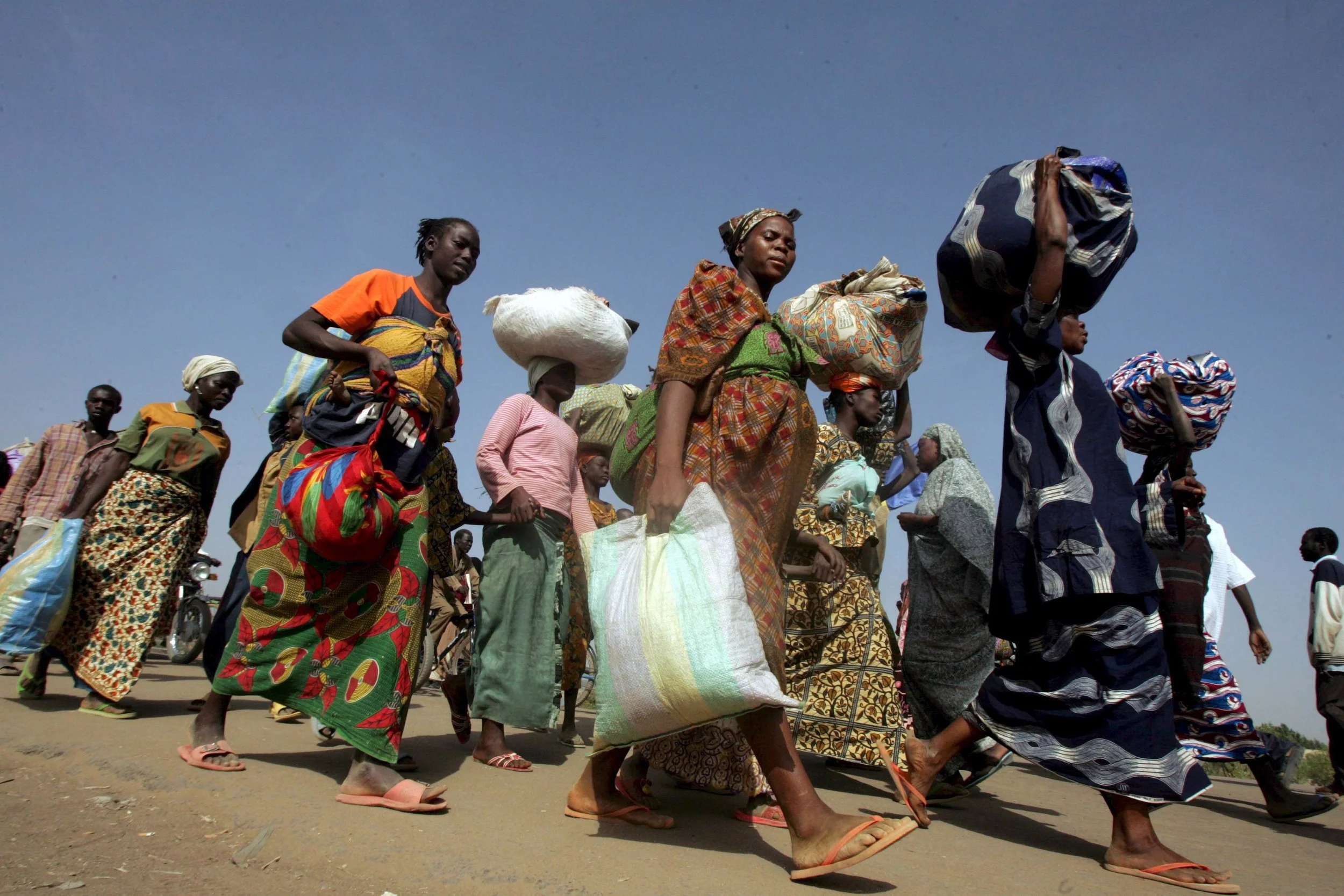
Thousands of women, men, and children fleeing the war in northern Cameroon / Ansa
Pope Leo has said that on his trip to Africa he wants to continue the dialogue with the Muslim world. The religious dimension has entered the clashes in Cameroon. Is this a religious war? And how can we foster dialogue between Christians and Muslims in Cameroon?
We cannot speak of a religious war in Cameroon. Historically, Christians and Muslims have coexisted in an atmosphere of mutual respect and collaboration. There is no shortage of concrete examples of integration, including in the field of education. The tensions observed are more attributable to external factors or socio-economic dynamics, such as conflicts between herders and farmers. There are families with members of both religious traditions. There is mutual respect between the two. Muslim students attend Catholic schools, and Christians live alongside Muslim families. For example, the famous De Mazenod College in Ngaoundere in the North Region has about 800 students, a third of whom are Muslim. The “Lamido,” the regional Muslim leader, attended the school, and now his son is also a student there. The tensions observed are largely attributable to external factors or socio-economic dynamics, such as conflicts between herders and farmers. Religion, in its authentic form, remains a force for unity, not division.
In Cameroon, there have been priests, missionaries, and mission workers who have been kidnapped or have been victims of persecution, especially in the north of the country. Is there extremism against Christians?
Interreligious coexistence in Cameroon remains largely peaceful. Incidents of violence, such as kidnappings, appear to be mostly linked to criminal activity and not to systematic religious persecution. The Church’s widespread presence, through schools and healthcare facilities open to all, attests to a deeply rooted and recognized service. Exemplary missionary figures continue to be respected by the entire population, regardless of religious affiliation, as is the case with Baba Simon, a missionary from Douala who has spent his entire priestly life in the Far North Region of Cameroon. He is a figure highly respected by everyone, both Christians and Muslims. Numerous missionaries, catechists, and Catholics committed to the Church continue to live in the Far North Region. Everywhere, the Catholic Church has hospitals and schools that welcome the entire population.
Pope Leo is concerned about environmental issues. How does climate change affect the lives of people in Cameroon and Guinea?
Climate change has a significant impact on daily life, particularly through shifts in the seasons and their effects on agricultural production. In a young and dynamic country, with a population whose average age is very low—18 years—and a total population of 33 million people, priorities remain strongly focused on development and building a dignified future.
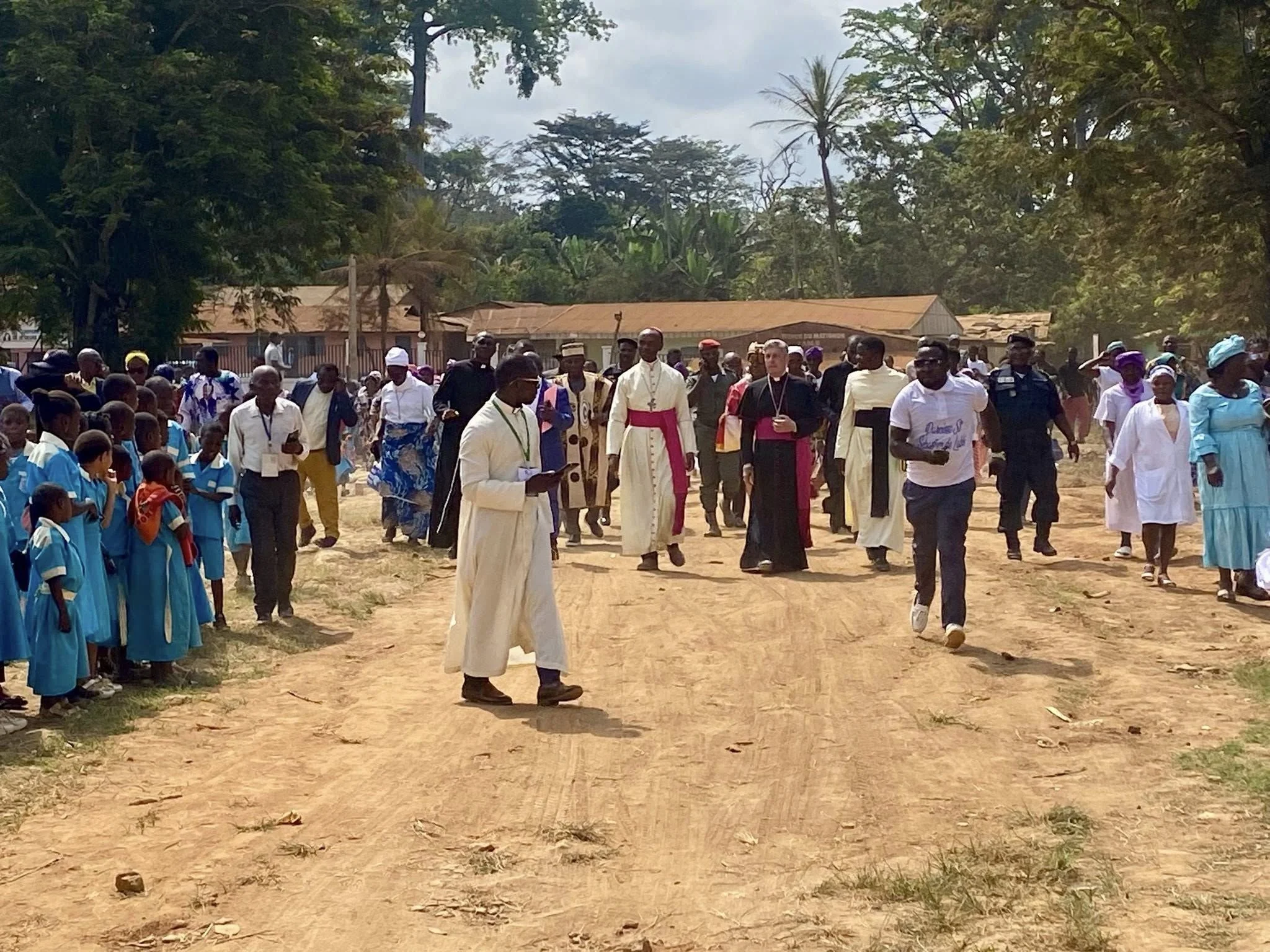
Archbishop José Avelino Bettencourt, Apostolic Nuncio to Cameroon and Equatorial Guinea, during a visit to the Diocese of Bafia / Facebook
The Catholic Church is growing in Africa. Why?
The growth of the Church in Africa is deeply linked to the value placed on family and life. Children are considered a precious gift from God and also represent a source of vocations. This growth is partly due to the fruitful evangelizing work carried out by missionaries, who have found a point of convergence between faith and traditional African values. In addition to pastoral care, the Church continues to have a concrete presence in society, especially in the fields of education, healthcare, and social assistance. This active presence helps make it a vibrant and dynamic point of reference. In Cameroon, there are 26 dioceses organized into 5 ecclesiastical provinces; there are approximately 300 religious congregations, ranging from the Trappists to the most active movements in society; and there is a Catholic university that also serves the various neighboring countries. It is a very vibrant and dynamic Church that will offer the Holy Father a heartfelt welcome.
What can the Catholic Church and Catholics in Africa do to promote “reconciliation, true communion among different ethnic groups, and justice,” as the Pope said?
This question is relevant for every continent, including Europe. Reconciliation is a process that requires time, commitment, and collaboration among all sectors of society. The first step is building a culture of peace, which also entails the courage to lay down arms. The Church plays a fundamental role in fostering dialogue among different social groups and in promoting a shared commitment. Human history cannot boast of perfect justice, but this does not exempt us from the responsibility to work concretely for a more just and reconciled society.
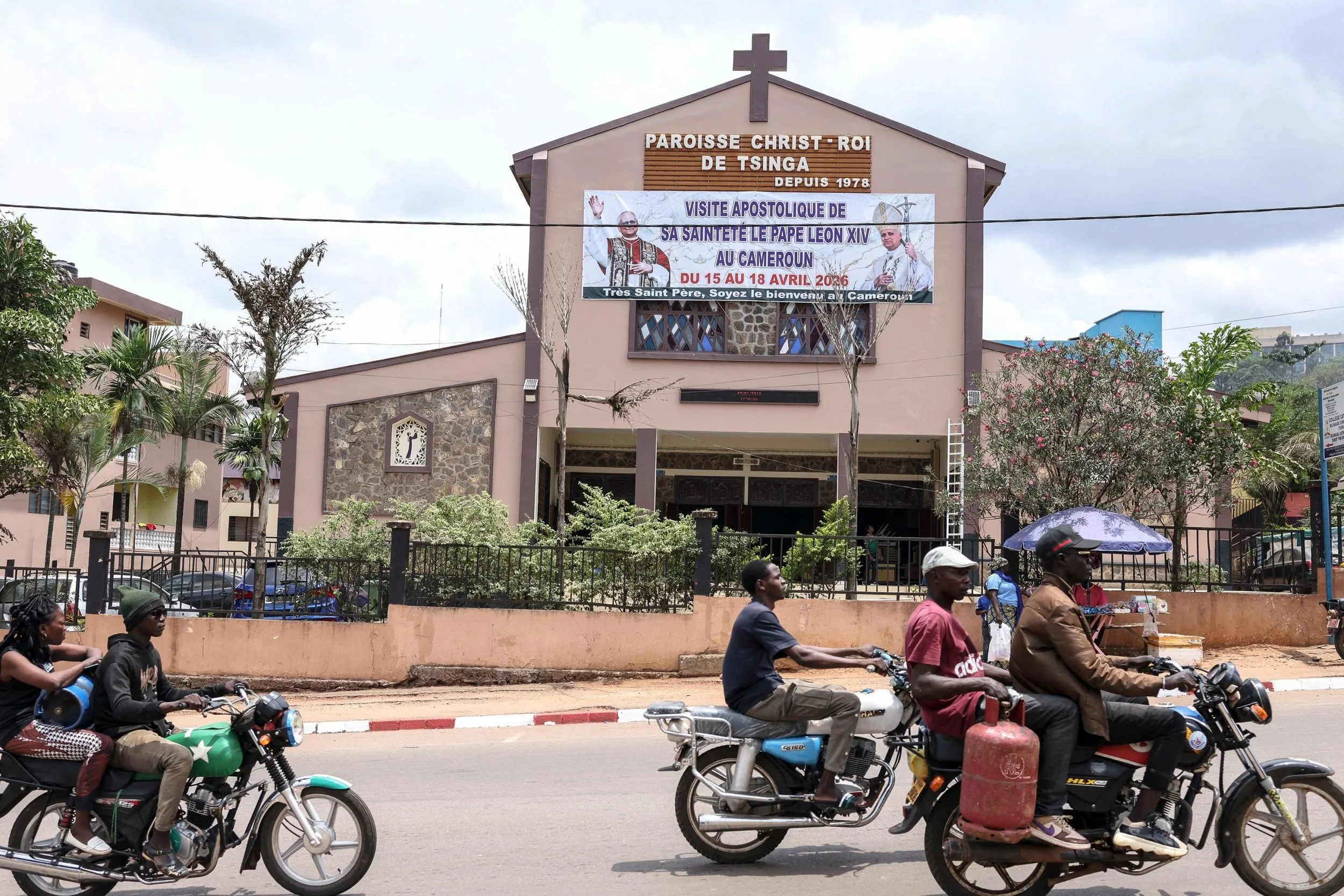
A banner bearing the face of Pope Leo XIV hangs outside Christ the King Parish of Tsinga, Yaoundé, announcing the Pope’s visit to Cameroon / AFP
Pope Leo dedicated his first apostolic exhortation to the poor and spoke of exploited peoples. Cameroon and Guinea are rich in natural resources that are often controlled by foreign companies. Is Africa still being exploited by the West?
The Holy Father has forcefully raised the issue of the exploitation of peoples. However, this phenomenon cannot be attributed solely to geographical factors. Today it manifests itself through complex global dynamics, in which various actors—often multinationals—operate, sometimes in opaque ways. These are new forms of exploitation that, in some cases, can amount to outright modern slavery.
How can the West help Africa?
Africa is a continent of extraordinary breadth and variety, comprising 54 countries, where the oldest expressions of human history—such as the great civilizations of Egypt—coexist alongside some of the most advanced innovations, as demonstrated, for example, by technological experiments in the field of mobility in certain urban areas across the continent. Beyond reductive and stereotypical interpretations, it is becoming increasingly clear that the relationship between Africa and the West cannot be interpreted solely in terms of unilateral aid. Rather, it takes the form of a mutual exchange, in which the West too is called to recognize how much it can receive from Africa. The continent, in fact, is rich not only in natural and agricultural resources, but also in a human and spiritual heritage of great value. One need only consider the deep roots of the African Christian tradition, which date back to the early centuries, with eminent figures such as Saint Augustine, along with a multitude of saints and martyrs, whose witness continues to offer a precious contribution to the life of the universal Church.