
Pope Leo XIV in Bamenda - The Poor Are the Light in a Bloodstained Land
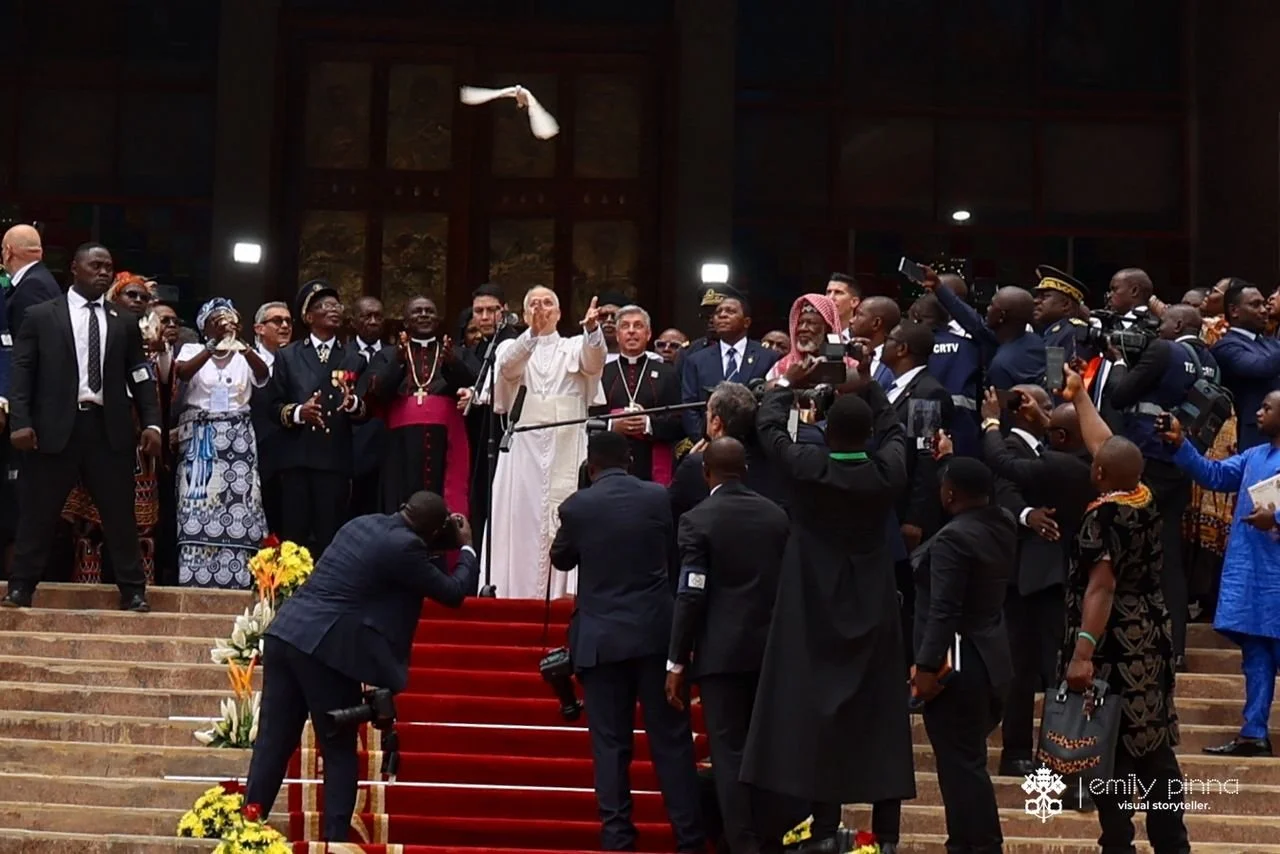
“As we release these white doves, symbols of peace—these are his words—may God’s peace descend upon all of us, upon this land, and keep us all united in His peace.”
In the heart of a region torn apart by separatist violence, Pope Leo XIV addresses the entire community, gathered in St. Joseph’s Cathedral for the peace gathering. He issues a warning “to those who distort religions and the very name of God to serve their own military, economic, and political objectives”
Faced with an “upside-down world,” made up of those who invest in weapons, those who plunder a country’s resources, and those who provoke “a spiral of destabilization and endless death,” the poor are “the light of the world.” On his second day in Cameroon, Pope Leo XIV speaks as a messenger of peace to the community of Bamenda, in the country’s northwest, a region ravaged by violence between Anglophone separatists and central government forces—a crisis forgotten by the world, which in about ten years has claimed thousands of lives and displaced hundreds of thousands, and has witnessed the suffering of the youngest among us as well as the sacrifice of several Church representatives, who continue unceasingly to bring their Gospel message.
The Pope’s appeals resonate during the peace gathering in St. Joseph’s Cathedral, a moment of great intensity punctuated by songs but above all by the enthusiasm of the faithful, perhaps still incredulous that Leo XIV could have chosen Bamenda as a stop on his trip to Cameroon. Participation is total, among the pews divided into colorful sections, there are
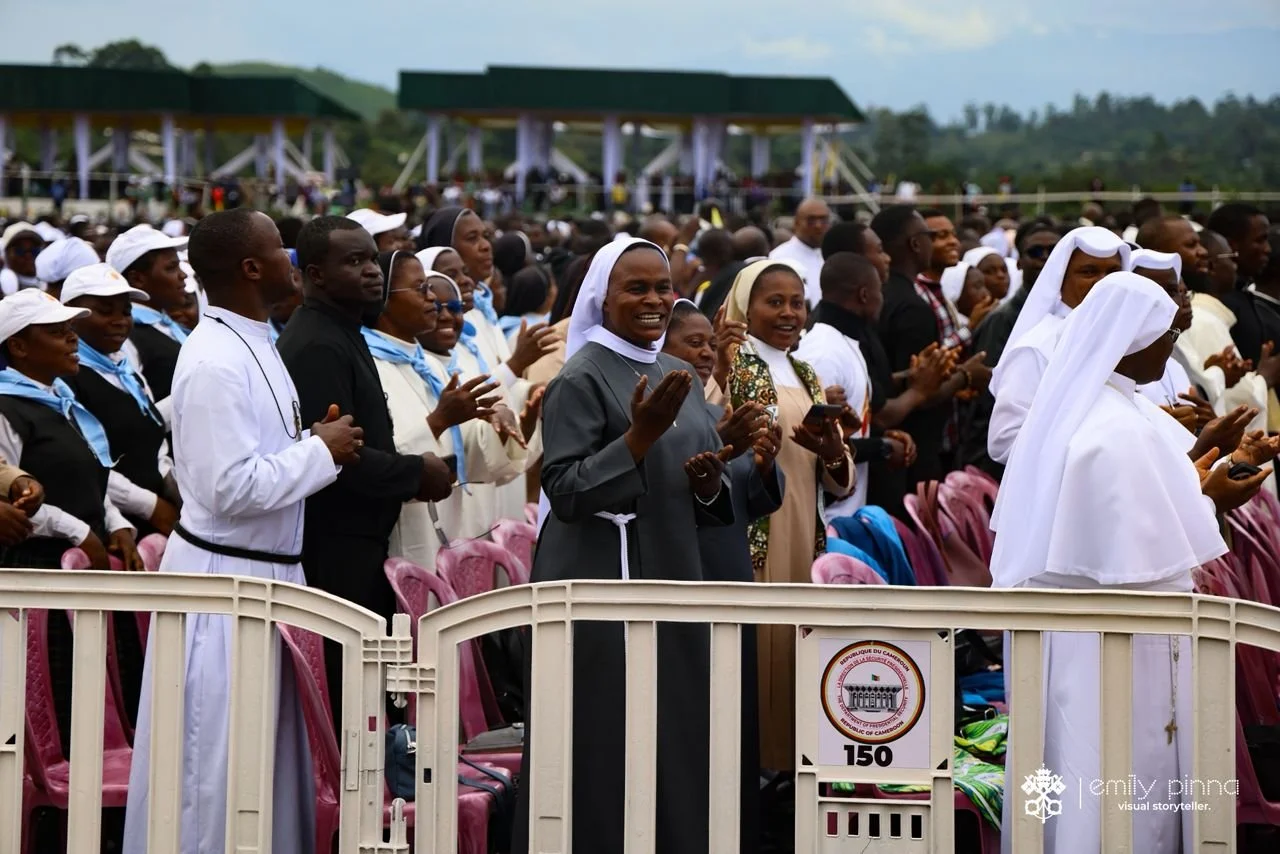
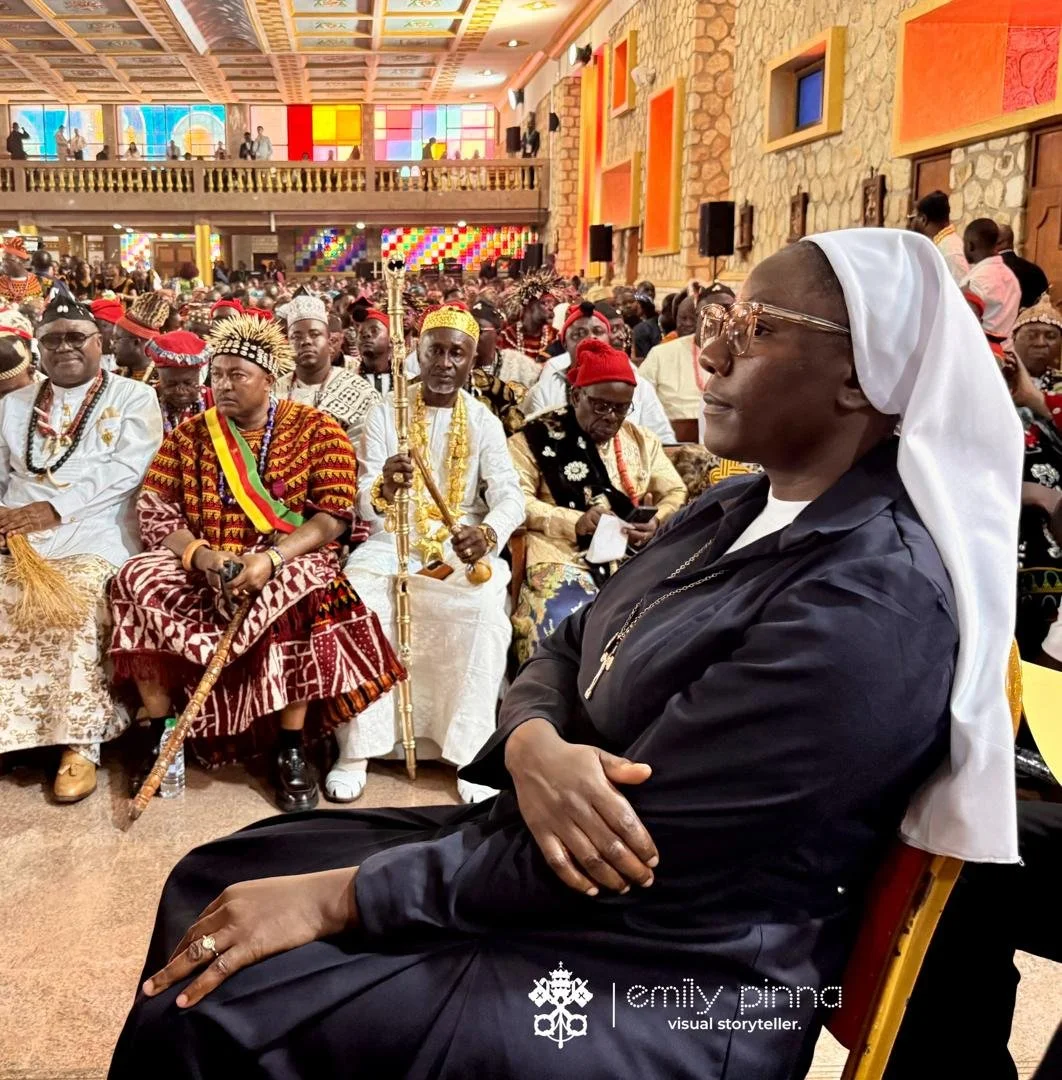
The Pope’s appeals resonate during the peace gathering at St. Joseph’s Cathedral, a moment of great intensity punctuated by songs but above all by the enthusiasm of the faithful, who perhaps still cannot believe that Leo XIV has chosen Bamenda as a stop on his trip to Cameroon. Participation is universal; among the pews divided into brightly colored sections, all segments of this society marked by poverty and destruction are present. Representatives of Protestant churches, the Islamic faith, priests, religious, catechists, and faithful from various linguistic groups listen to the Pontiff’s words in an atmosphere of brotherhood, sustained by the truce declared by separatist groups on the occasion of his visit. A tangible sign of the need and desire to hear words of consolation and peace in a “tormented region,” as Leone describes it—a community overwhelmed “by pain” yet never abandoned by God, and thus able to begin anew.
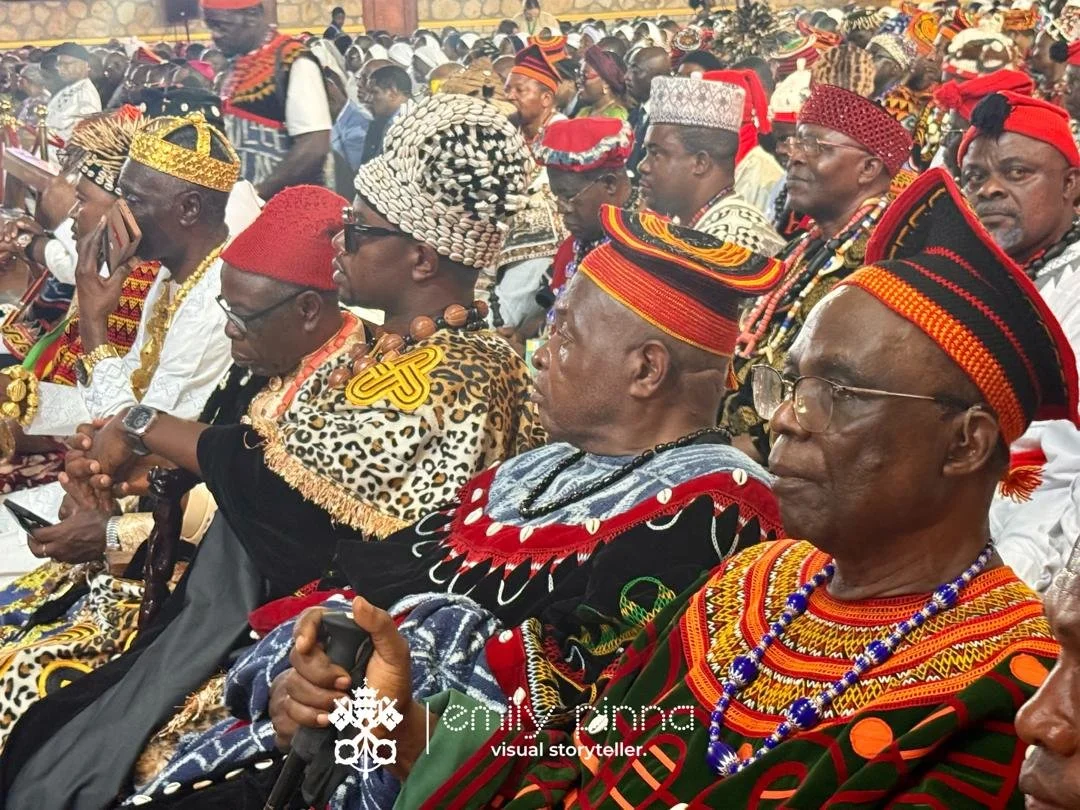
How beautiful are your feet as well, dusty from this bloodstained yet fertile land, from this land that has been violated yet is rich in vegetation and generous with fruit. These are the feet that have brought you this far and that, despite encountering trials and obstacles, have kept you on the paths of goodness.
Blessed are the peacemakers
Persecution and suffering make no distinction between faiths, races, languages, or skin colors; everyone is traumatized and in need of psychological and spiritual healing. This is evident from the testimonies presented to the Pope, who praises the work of the Peace Movement led by Christian and Muslim communities in their efforts to “mediate between opposing sides.” They are the ones who bring the message of peace to the whole world, despite attempts to exploit religions.
Blessed are the peacemakers! Woe, however, to those who bend religions and the very name of God to their own military, economic, and political objectives, dragging what is holy into what is most filthy and dark. Yes, dear brothers and sisters, you who hunger and thirst for justice, you who are poor, merciful, meek, and pure of heart, you who have wept—you are the light of the world!
The Warlords
The mandate to be “oil poured upon human wounds” is entrusted by Leo XIV precisely to the poor, with the instruction never to lose their identity, continuing to be “the salt that gives flavor to this earth,” treasuring what has been shared “in the hour of weeping.”
And then there is the “immense work” of supporting those who have been victims of violence. The Pope addresses the women—both lay and religious—who carry out this work of accompaniment, despite the risks involved in a land where “those who wage war pretend not to know that it takes only a moment to destroy, but often a lifetime is not enough to rebuild.”
They pretend not to see that billions of dollars are needed to kill and devastate, yet the necessary resources to heal, educate, and rebuild are nowhere to be found. Those who rob your land of its resources generally invest a large portion of their profits in weapons, in a spiral of destabilization and endless death.
The Call for Unity
All of Bamenda, wounded, entrusts itself to the Pope, so that we may bring this conflict to an end and return to living in lasting peace. Leone thus points to the need to change course, for this is the moment to make a “U-turn”; this is the opportunity for “every honest conscience” to “denounce and repudiate,” taking the path of sustainability “and human fraternity.” The call is for the unity of a people urged to look one another in the eye, with the awareness of being “immense” in the face of a world “destroyed by a few rulers” and held together “by a myriad of brothers and sisters in solidarity.”
Peace is not something to be invented: it is to be embraced, by welcoming our neighbors as brothers and sisters. No one chooses their brothers and sisters: we simply have to welcome one another! We are one family and we live in the same home, this wonderful planet that ancient cultures have cared for over millennia.
A silent revolution
Leo XIV takes his leave of Bamenda, entrusting to its people the task of reconciling and serving, united, the cause of peace, “each according to their own vocation.” The communities of Bamenda, who see in him an ambassador of reconciliation and a promoter of justice and who over time have borne witness to a “silent revolution,” are invited to continue walking that same path which, despite everything, has so far prevented the crisis from degenerating into war.
The Flight of the Doves
In the churchyard of St. Joseph’s Cathedral, Pope Leo, at the conclusion of the meeting for peace, reaffirmed that “the Lord has chosen us all as workers who bring peace to this land!”, and then invited everyone to pray: “As we release these white doves, symbols of peace—these are his words—may God’s peace descend upon all of us, upon this land, and keep us all united in His peace.”
Fom Vatican News - Francesca Sabatinelli - Correspondent in Bamenda